
By Sanad Sahelia
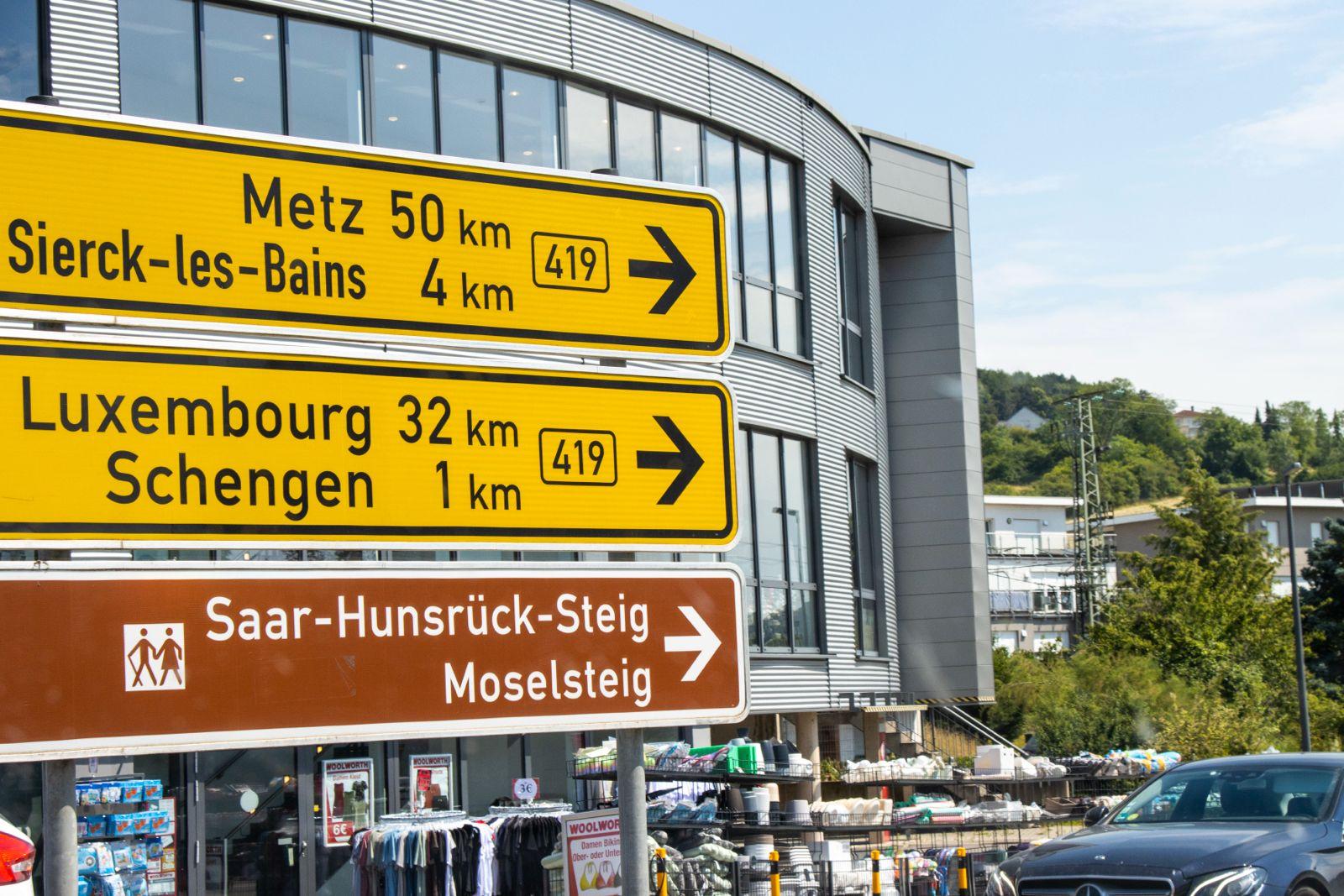
In the space of a few hours, I travelled from France to Luxembourg, through the village of Schengen, and on into Germany. I never left my car. No one asked for my passport. No one questioned where I was going. I was crossing international borders between sovereign states, yet nothing along the road suggested that I had left one country and entered another. The road simply continued, as though it had been built to connect people rather than separate them.
Standing in Schengen, the small Luxembourgish village on the banks of the Moselle River that gave its name to the Schengen visa and the Schengen Area, I was reminded that history is not always made in great capitals. This quiet village became the birthplace of one of Europe's most remarkable political achievements, an agreement that today allows 29 countries to share a common space without internal border controls.
The Schengen Agreement did far more than simplify travel. It reflected a powerful idea, that nations once divided by war, suspicion, and barbed wire could choose trust over fear, cooperation over division.
That is why, across much of Europe, crossing a border has become almost invisible. Often, the only indication that you have entered another country is a blue roadside sign before the journey carries on uninterrupted.
In my pocket was a Schengen visa, a document only a few centimeters wide. Yet it gave me something that millions of Palestinians still do not enjoy in their own homeland: freedom of movement. At that moment, the visa itself no longer mattered. What mattered was what it represented.
How could a single document open the doors to an entire continent while a Palestinian living in the occupied West Bank cannot travel between two cities without passing through military checkpoints, iron gates, or restrictions imposed along the way?
As I crossed from Luxembourg into Germany in just a few minutes, my thoughts drifted home, to the road between my hometown of Taybeh and Ramallah, between Ramallah and Bethlehem, and between Nablus and Jenin. On a map, these are short journeys. In reality, they can become hours of waiting, uncertainty, or a trip with no guarantee of ever reaching its destination.
The difference is not measured in kilometers. It lies in what the road itself represents. In Europe, borders have largely disappeared from daily life. In the occupied West Bank, the road itself can become an obstacle, delaying a patient on the way to hospital, a student trying to reach university, a worker heading to work, or a family simply hoping to be together.
For a few hours, I experienced what it means to travel without fear, without inspections, and without waiting. I realized that freedom of movement is far more than an administrative convenience. It is a deeply human condition. It shapes our relationship with time, with place, and with the ordinary rhythm of life.
Schengen also reminded me that borders are not, in themselves, the problem. Every country has borders. The problem begins when borders cease to define states and begin to define people's lives, when freedom of movement, one of the most basic expressions of human dignity, becomes a privilege granted to some and denied to others.
Perhaps that is why Europe's own history came to mind. Not so long ago, this continent too was marked by walls, barbed wire, checkpoints, and bitter divisions. Yet Europe chose a different path. It made freedom of movement one of the foundations of its common future, transforming roads into places of connection instead of separation.
I left Schengen carrying one question with me. If Europe, after generations of conflict and division, succeeded in making borders almost invisible in everyday life, will the day come when Palestinians, too, can travel from one city to another with the same simplicity?
As I drove away from Schengen, I found myself thinking less about Europe than about the meaning of freedom itself. Freedom is not simply the ability to cross international borders. It is the ability to reach your own town without the road deciding whether you will arrive.
What has stayed with me ever since is not the road itself, but how ordinary it felt. In Europe, freedom of movement has become so natural that it is almost invisible. For millions of Palestinians, it remains an aspiration rather than a lived reality. I travelled thousands of kilometers to experience something that should never depend on distance: the simple freedom to move through one's own homeland.